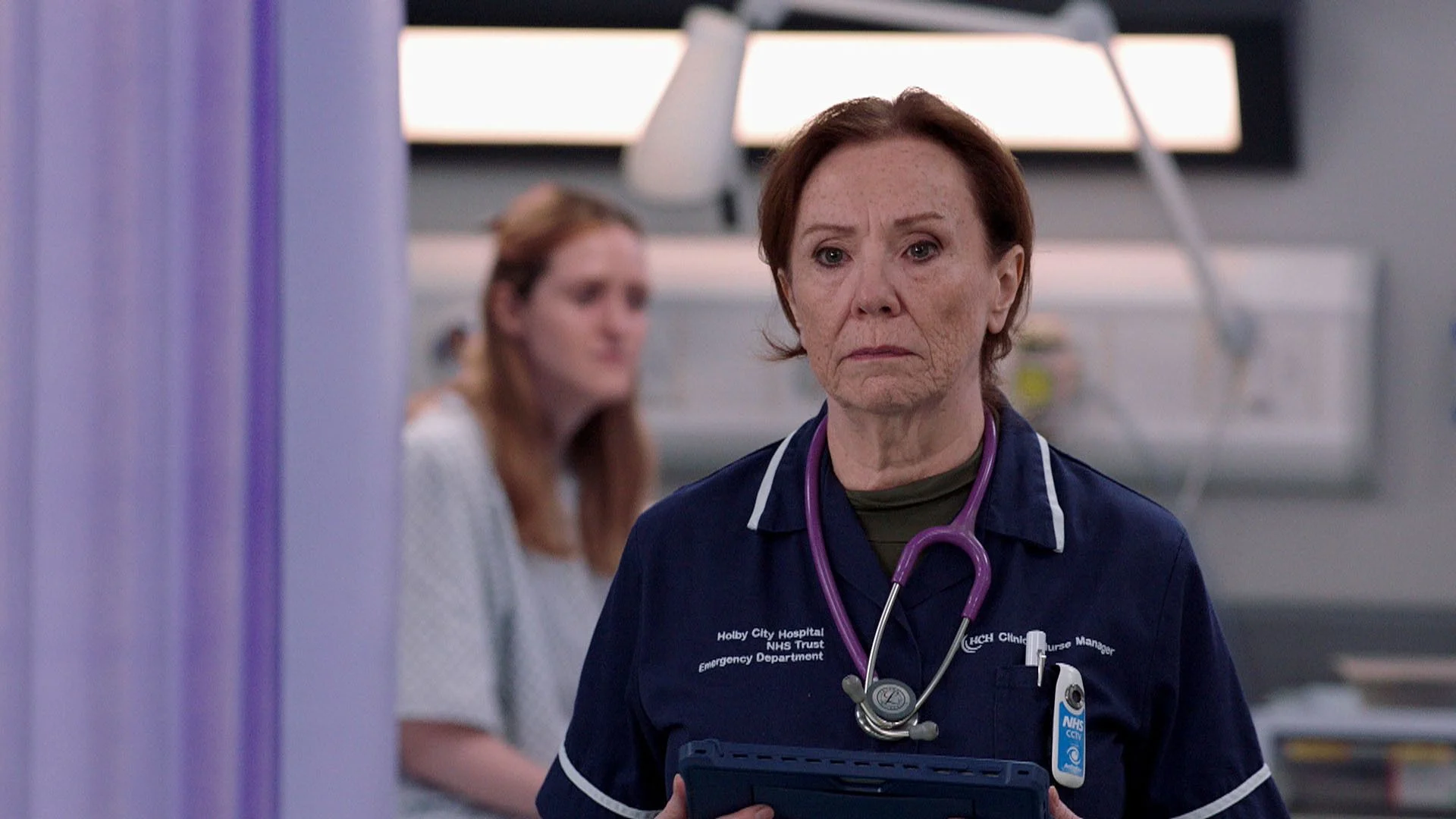
Walking Back Into the Storm: Siobhan’s Fight to Stay Standing in Holby
Holby ED is a place where pressure is constant and fear is usually something you treat in others. But for Siobhan, that line has been brutally erased. In the aftermath of her attack, she’s back on the floor, back in uniform, back among patients — and yet nothing feels the same. Every corridor seems louder. Every sudden movement feels sharper. Every emergency carries an echo of what she’s trying desperately not to relive.
On the surface, Siobhan is doing what she has always done best: working. She throws herself into treating patients with the same focus and precision that once defined her. To colleagues, it looks like resilience. To Flynn, though, it looks like something else entirely — a woman running on adrenaline and denial, determined to prove she’s fine because admitting she isn’t feels like losing control all over again.
When Flynn gently raises the idea of therapy, it lands like a challenge rather than a lifeline. Siobhan is clear: she doesn’t want special treatment. She doesn’t want whispers, softer shifts, or worried looks. She wants to be seen as capable, as steady, as the professional everyone has always relied on. In her mind, accepting help feels dangerously close to admitting she’s broken.
But the cracks are there, even if she refuses to name them.
There are moments when her hands hesitate just a fraction too long before touching a patient. Moments when her eyes flick to the door at the sound of raised voices. Moments when her breathing tightens, and she has to force herself to stay in the room. These are small things — invisible to most — but they are slowly rewriting how she experiences every shift.
Flynn sees it. He doesn’t push, not at first. His concern isn’t about performance, or hospital protocol. It’s about Siobhan herself. He knows that trauma doesn’t disappear just because you show up to work. And he knows that Holby, for all its life-saving heroics, can be the worst possible place to pretend you’re okay when you’re not.
What makes this storyline so powerful is Siobhan’s quiet resistance. She isn’t collapsing. She isn’t breaking down in dramatic fashion. She’s doing something far more dangerous: enduring. Smiling through it. Powering through it. Telling herself that if she just keeps moving, the fear will eventually fall behind her.
But trauma doesn’t work like that.
The question now isn’t whether Siobhan can keep treating patients — it’s how long she can keep treating herself like she doesn’t need care. Therapy represents more than a conversation in a quiet room. It represents vulnerability. It represents reopening a door she’s trying to keep firmly shut. And it represents the terrifying possibility that healing might require her to stop pretending she’s already healed.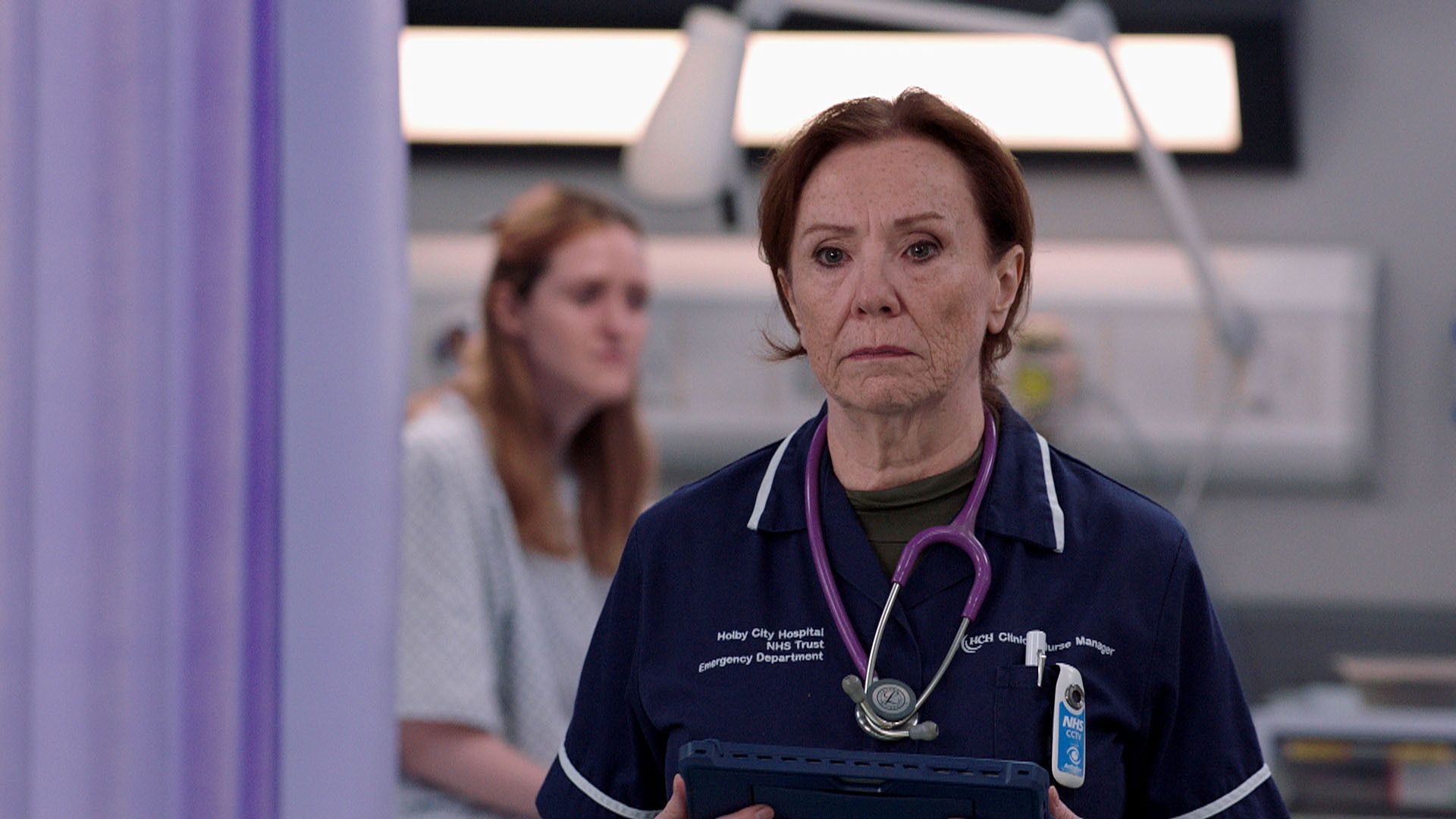
As pressure builds in the ED and the pace refuses to slow, Siobhan is standing at a crossroads. One path is familiar: push forward, stay strong, don’t look back. The other is harder, and quieter, and far more honest.
Sooner or later, she’s going to have to choose.
And when she does, it could change not just how she works in Holby — but how she survives it.