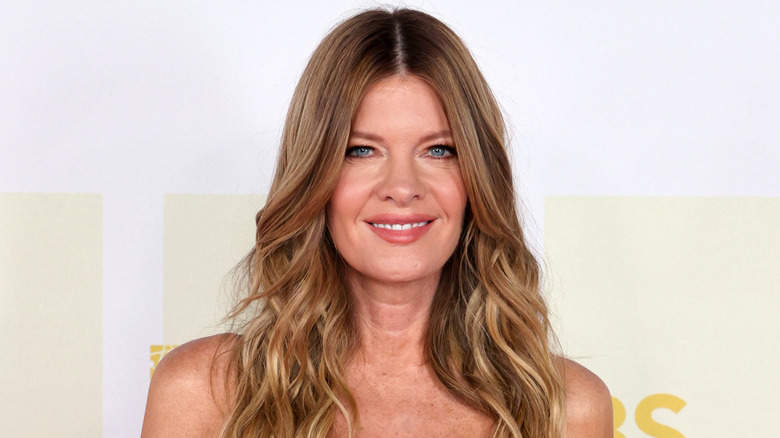
Michelle Stafford Opens Up About Her Brain Tumor: Shares Diagnosis For the 1st Time
Michelle Stafford Opens Up About Her Brain Tumor: A Shocking Revelation That Redefines Strength and Survival
Michelle Stafford has always been known for her honesty. To fans of The Young and the Restless, she isn’t just the unforgettable Phyllis Summers — she’s a woman who has never shied away from sharing the raw realities of her life. Over the years, Michelle has spoken openly about her struggles with infertility, the emotional challenges of becoming a single mother, and the balancing act of raising two children while maintaining a demanding career. She has built a relationship with her audience based on vulnerability and trust, treating fans less like spectators and more like extended family.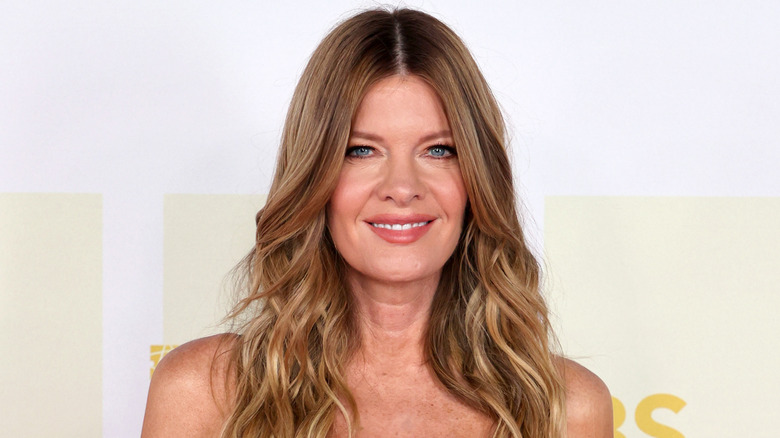
But even with that reputation for openness, there was one deeply personal chapter she kept hidden for decades.
And when Michelle finally revealed it, the truth stunned everyone.
During a recent appearance on the Soapie podcast, hosted by fellow soap stars Greg Rikaart and Rebecca Budig, what began as a warm, lighthearted conversation took an unexpected and emotional turn. Without dramatic buildup or rehearsed phrasing, Michelle casually dropped a revelation that instantly changed the tone of the room.
“I had a brain tumor,” she said.
The words landed with quiet force. Even the hosts were momentarily speechless. Michelle explained that she was diagnosed at just 19 years old — a time when most young people are focused on dreams, careers, and possibilities, not life-altering medical battles.
And yet, for over three decades, she had never publicly shared the full story.
At the time of her diagnosis, Michelle was just beginning her modeling career. She was young, ambitious, and determined to make her mark in the industry. When doctors told her surgery was necessary, her reaction was not what anyone would expect.
She wasn’t terrified.
She wasn’t overwhelmed.
She was worried about her hair.
In a moment that now feels both shocking and strangely relatable, Michelle admitted that what upset her most wasn’t the idea of brain surgery — it was the fact that her head would be shaved. She was terrified visible scars or hair loss would ruin her modeling prospects before they even truly began.
Looking back, she can laugh at herself. But the honesty of that memory reveals something deeper: how disconnected young people often are from their own mortality. At 19, she saw the diagnosis as an inconvenience, not a threat to her life.
“I had my priorities,” she joked. “I mean, I had a brain tumor, and I was like… my hair.”
At the time, her parents were panicking. Doctors were preparing for an incredibly complex operation. But Michelle remembers approaching it with an almost unbelievable calm.
“It’ll be fine,” she recalled thinking. “They’ll just take it out.”
Just take it out.
The reality, of course, was far more terrifying.
As she shared more details, the gravity of the situation became impossible to ignore. The surgery required a team of specialists, including a brain surgeon and an ophthalmologist, because the tumor was dangerously close to areas affecting her vision.
Then came the detail that truly stunned listeners.
Doctors had to remove part of her face in order to access the tumor.
Her face was literally taken apart and reconstructed.
Greg Rikaart and Rebecca Budig sat in stunned silence as Michelle calmly described a procedure that sounds more like something from a medical drama than real life. Even though they knew she’d once had a brain tumor, none of them had ever understood just how extreme and invasive the surgery had been.
And yet, Michelle spoke about it with an eerie sense of detachment — as if it were something that happened to someone else.
The surgery was successful. The tumor was removed. She recovered. And she moved on with her life as if it were simply another chapter closed.
But one moment from that experience has stayed with her forever.
As she was being wheeled into the operating room, Michelle had a sudden, crystal-clear thought:
“Nothing will ever be this hard again. Nothing in my life will ever be this bad.”
It was a quiet realization — not dramatic, not tearful — just a deep internal truth. In that moment, she believed that whatever came next, she would survive it. Because if she could survive this, she could survive anything.
And in many ways, that belief shaped the rest of her life.
After recovering, Michelle threw herself into her career with renewed determination. Modeling led to acting, and acting led her to the role that would define her legacy: Phyllis Summers on The Young and the Restless. For decades, she portrayed one of daytime television’s most complex and controversial characters — fiery, passionate, flawed, and endlessly resilient.
Fans watched Phyllis endure betrayals, heartbreak, losses, and scandals. But behind the scenes, Michelle had already lived through something far more terrifying than any soap opera storyline.
What’s most striking is that she admits fear wasn’t really part of her mindset back then.
“I wasn’t afraid,” she said.
But that changed.
Motherhood changed everything.
Now, with two children depending on her, fear feels very real. The same woman who once faced brain surgery without panic now finds herself deeply aware of risk, mortality, and responsibility. The idea of not being there for her children is what truly terrifies her.
And that realization, she admits, feels ironic.
At 19, she had nothing to lose and everything to prove. Today, she has everything to lose.
Greg Rikaart offered a powerful reflection during the podcast, suggesting that perhaps the real lesson lies in rediscovering that fearless version of ourselves — and finding ways to pass that strength on to our children without needing a life-altering crisis to awaken it.
And that’s where Michelle’s story becomes something bigger than just survival.
It’s about perspective.
It’s about how trauma doesn’t always announce itself loudly. Sometimes it hides quietly in the background of a life that keeps moving forward. Sometimes the most defining experiences are the ones we never talk about.
For fans of The Young and the Restless, this revelation adds an entirely new layer to Michelle Stafford’s legacy. Phyllis Summers has survived explosions, fake deaths, betrayals, and emotional warfare — but Michelle survived something real, something that could have ended her story before it ever truly began.
Her decision to finally share this chapter isn’t about seeking sympathy. It’s about honoring the truth. About acknowledging the silent battles that shape who we become.
Michelle Stafford’s story isn’t just about a brain tumor.
It’s about a young woman who stared down mortality without even realizing it.
It’s about a career built on resilience she didn’t know she possessed.
And most of all, it’s about the quiet strength of surviving something so monumental that everything afterward feels possible.
Sometimes the bravest stories are the ones we keep to ourselves.
Until one day, we finally find the courage to say them out loud.