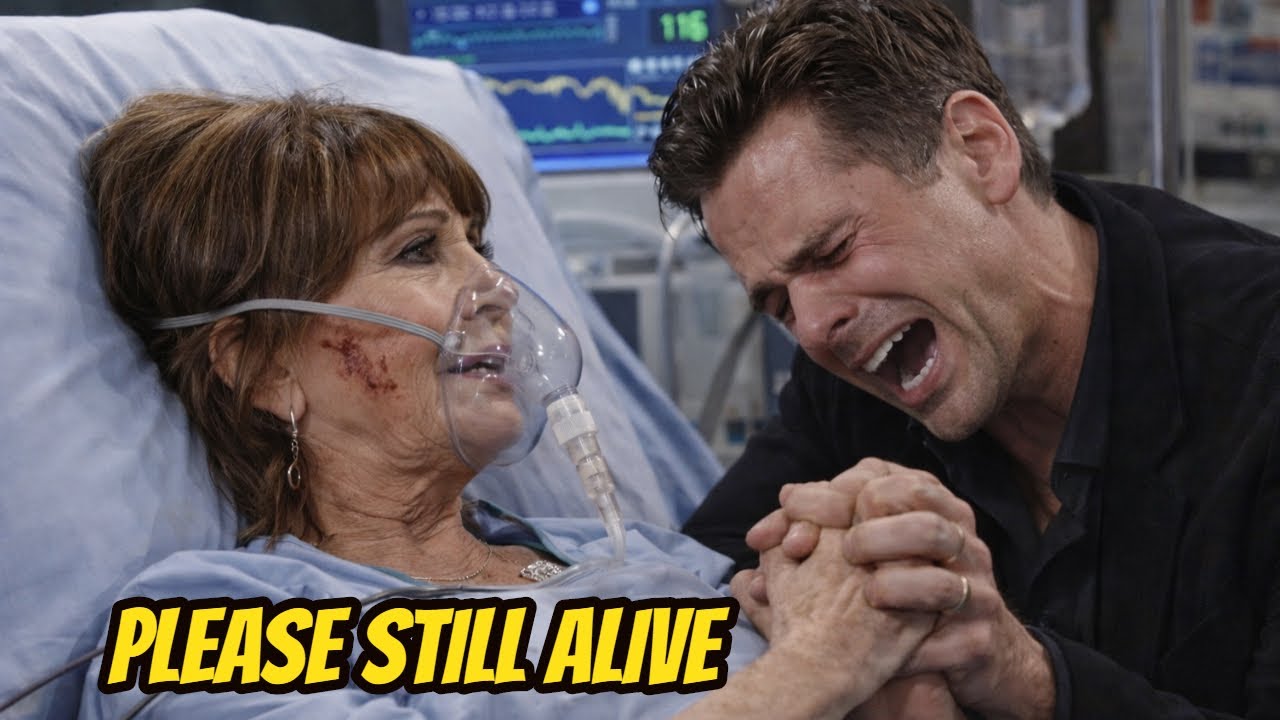
Jill reveals three secrets to Cane before she dies- eliminating Billy’s inheritance rights Y&R Shock
Billy Abbott emerges as the focal point of a complex convergence of power, legacy, and emotional urgency in Genoa City. With Jill Abbott’s health in question, the balance of authority begins to quietly shift. Billy’s private conversation with Cane Ashby reveals his willingness to let the Chancellor position move forward without delay. On the surface, the move appears procedural, but it is deeply strategic. The timing aligns with a broader effort to weaken Newman Enterprises and challenge Victor Newman’s dominance. Billy recognizes the opportunity as fleeting and chooses action over hesitation. His decision positions him not just as a participant, but as a subtle architect of corporate change. Yet the emotional context cannot be ignored. Jill’s absence and silence weigh heavily on his resolve. His actions suggest urgency driven as much by fear of loss as by ambition.
The tension escalates when Sally Spectra, acting out of concern, inadvertently disrupts Billy’s fragile strategy. Her intention to inform Jill of Billy’s meeting with Cane is rooted in loyalty and transparency. Instead of reaching Jill directly, Sally speaks with Snapper Foster, Jill’s brother. This conversation takes an emotional turn when Sally learns Jill’s cardiovascular condition has worsened. The health crisis is no longer theoretical but immediate and serious. This knowledge reframes Billy’s actions in a more troubling light. What once looked assertive now appears potentially premature. Sally becomes a reluctant bearer of truth, torn between disclosure and restraint. Her choice carries the power to either halt Billy’s advance or allow it to continue unchecked. The situation underscores how personal crises reshape corporate decisions. It also highlights how easily good intentions can lead to unintended consequences.
Jill Abbott’s possible decline resonates far beyond plot mechanics and into the show’s deep history. As a cornerstone character since 1973, Jill represents a living connection to the series’ origins. Her resilience and vulnerability, portrayed by Jess Walton, have defined decades of storytelling. Her relationship with the late Katherine Chancellor created some of daytime television’s most enduring emotional moments. The thought of Jill fading feels like a cultural loss rather than a simple storyline. Against this backdrop, Billy’s motivations grow increasingly conflicted. Reclaiming Chancellor could be seen as honoring Jill’s legacy. Yet it could also be interpreted as exploiting her absence. Billy has long struggled between honoring his family and escaping their shadow. Jill’s illness forces that contradiction into the open. His choice now may define whether he becomes a steward of legacy or a user of it.
The ripple effects of Jill’s health crisis extend to Cane Ashby and beyond. Cane’s emotional bond with Jill runs deep despite the revelation that they are not biologically related. For him, Jill was a source of belonging and stability during formative years. His history with Billy remains strained but unresolved. Billy’s recent overture regarding Chancellor feels sincere to Cane, not strategic. Phyllis Summers, however, views the situation with suspicion and resentment. She believes Billy benefits from indulgence while others pay harsher prices. Cane, in contrast, sees Billy’s pain over losing Chancellor to Victor Newman as a genuine wound. Jill’s potential return could instantly upend all assumptions and agreements. Her values favor unity and stability over renewed conflict. Ultimately, her illness forces every character to confront whether legacy is about power or the ability to preserve peace.