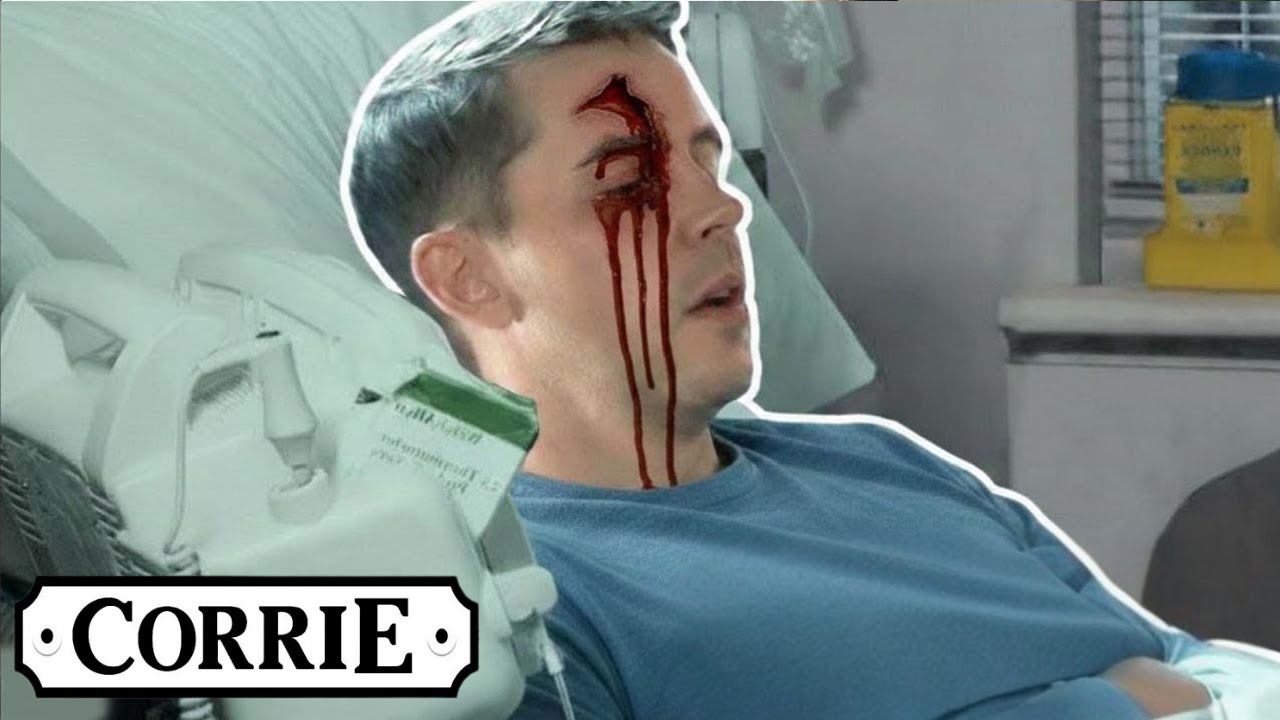
Theo Crosses the Line — Todd Dies in Devastating Coronation Street Twist
Coronation Street has delivered one of its most harrowing and emotionally devastating storylines in years, as Todd Grimshaw’s tragic death sends shockwaves through Weatherfield and leaves an entire community grappling with the brutal reality of abuse, manipulation, and silence. What began as subtle psychological control has ended in fatal consequences, transforming Todd’s story into a powerful and deeply unsettling reckoning that refuses to fade quietly into soap history.
From the moment Theo Silverton entered Todd’s life, there was an unmistakable shift in Todd’s behaviour. Once known for his sharp wit, emotional resilience, and complicated but genuine capacity for love, Todd slowly became withdrawn, anxious, and visibly unsettled. Theo arrived cloaked in authority and moral certainty, presenting himself as a figure of guidance and righteousness. To the outside world, he seemed respectable, even trustworthy. But behind closed doors, his influence was corrosive and deliberate.
Theo’s abuse was never just physical. It was psychological, ideological, and profoundly manipulative. He weaponised guilt and shame, convincing Todd that his identity was flawed, that his past choices made him unworthy, and that suffering was something he somehow deserved. Over time, Todd’s confidence eroded, replaced by fear and self-doubt. He stopped laughing the way he used to. He became evasive with friends. His bruises were brushed off as accidents, his emotional volatility dismissed as stress.
Billy and Paul both sensed something was wrong, but like so many real-life cases, the signs were easy to misinterpret and easier to ignore. Todd insisted everything was fine. Theo appeared supportive in public. And the community, busy with its own dramas, failed to see the storm brewing in plain sight.
The turning point came when Todd finally attempted to break free. In a rare moment of clarity, he recognised that Theo’s behaviour was not love, not faith, not redemption — it was control. Todd confronted him, trying to reclaim his autonomy and expose the truth. But that act of defiance proved fatal.
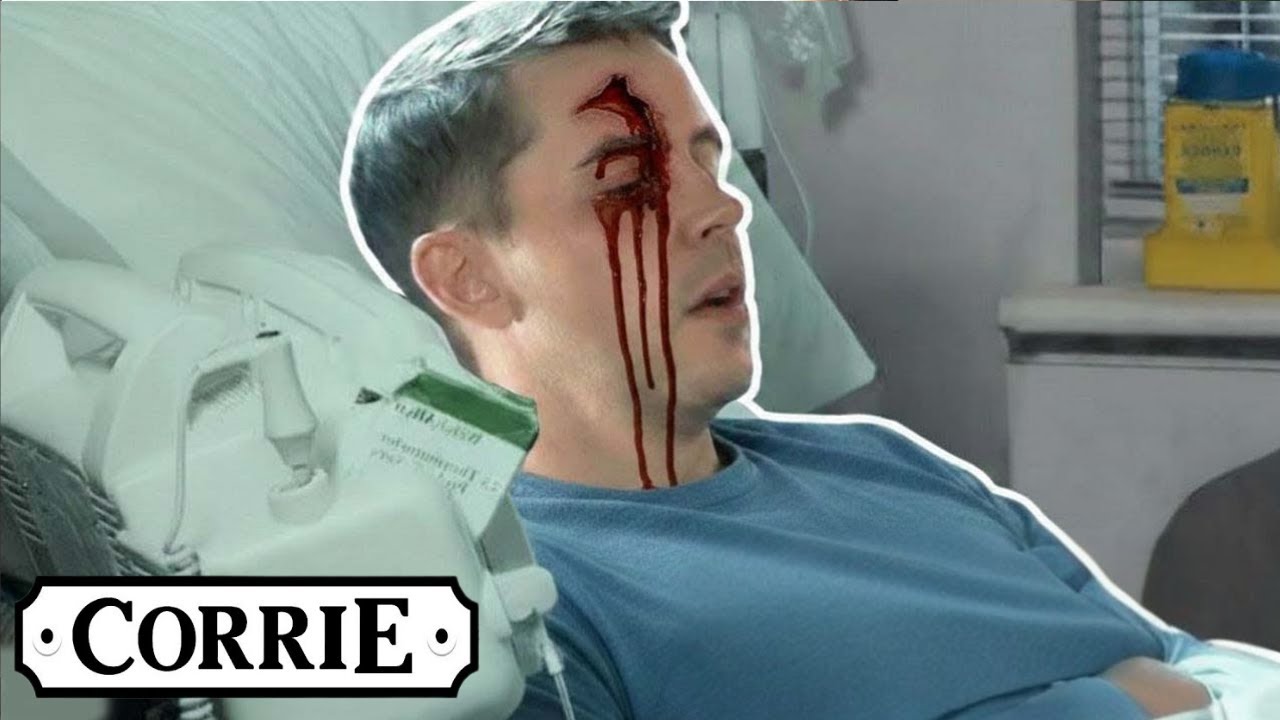
Theo’s response was explosive and violent. What followed was a brutal assault that left Todd gravely injured, both physically and emotionally shattered. Barely conscious, he was rushed to hospital as the horrifying reality began to surface. Whispers of abuse spread through Weatherfield, and the pieces finally started to connect.
In his final hours, Todd’s vulnerability was laid bare. Weak, frightened, and filled with regret, he spoke quietly of how trapped he had felt, how ashamed he had been to admit the truth, and how he hoped his story might help someone else escape before it was too late. Those words transformed his death from a personal tragedy into a devastating social statement.
Despite the doctors’ efforts, Todd’s condition deteriorated rapidly. When he died, the shock rippled outward instantly. The street fell into stunned silence. For many viewers, it felt like losing someone they had grown up with — a character who had loved deeply, made mistakes, rebuilt himself, and ultimately paid the ultimate price for trusting the wrong person.
Billy’s grief was raw and overwhelming. Consumed by guilt, he replayed every conversation, every missed warning sign, every moment he had chosen reassurance over confrontation. Worse still, he was forced to confront the fact that Theo had hidden behind religious rhetoric, using faith as a shield for cruelty. Billy’s crisis of belief became one of the most emotionally powerful consequences of Todd’s death, highlighting how abuse can thrive when cloaked in moral authority.
Paul’s reaction was different but no less intense. His grief hardened into rage. He became determined that Todd’s suffering would not be forgotten, that the truth would be spoken loudly and without euphemism. Paul refused to let Todd be reduced to a footnote in Theo’s downfall. He wanted accountability, not just legally, but socially and emotionally.
Theo’s arrest brought little comfort. As the court case unfolded, the full extent of his manipulation was exposed — a pattern of coercive control, emotional isolation, and escalating violence. Todd’s medical reports and recorded statements painted a horrifying picture of someone slowly being erased long before the final assault occurred.
The trial scenes were almost unbearable to watch. Not because they were sensational, but because they were restrained. Todd’s final words, read aloud in court, carried more weight than any dramatic confrontation ever could. His fear was palpable even in absence. His plea — that someone listen, that someone believe — landed like a punch to the chest.
Yet even with Theo convicted, justice felt hollow. No verdict could bring Todd back. No sentence could undo the damage. The community was left with an uncomfortable truth: closure is often a myth when the cost has been a life.
In the weeks that followed, Weatherfield felt permanently altered. Todd’s absence lingered in small, devastating ways — an empty chair in the Rovers, a joke that fell flat because the one person who would have delivered the perfect comeback was no longer there. These quiet moments proved more powerful than any public memorial.
The ripple effects extended beyond grief into reflection and fear. Residents began reassessing their own relationships, questioning where care ends and control begins. Conversations about coercive behaviour, emotional manipulation, and internalised shame emerged across the street. Todd’s death became a catalyst for awareness rather than a storyline neatly wrapped up and forgotten.
Summer’s response captured the generational impact of the trauma. Torn between anger and confusion, she struggled to reconcile the Todd she knew with the suffering he endured in silence. Her emotional withdrawal and reckless behaviour illustrated how abuse fractures not just one life, but many.
Coronation Street refused to sanitise the aftermath. Characters were allowed to lash out, retreat, make mistakes, and sit in their pain. Healing was messy, uneven, and unresolved — a reflection of reality rather than television comfort.
Over time, Todd’s legacy began to take shape in quieter ways. Support groups were referenced. Helplines appeared on screen. Characters spoke openly about experiences they had once buried. His death became a warning etched into the fabric of the street: that abuse does not always arrive loudly, that danger often hides behind respectability, and that believing someone should never come too late.
Todd Grimshaw’s death stands as one of Coronation Street’s most heartbreaking and important chapters. Not because of shock value, but because of the brutal truths it exposed. His story forces viewers to confront uncomfortable realities about silence, shame, and the devastating cost of inaction.
In the end, Todd’s voice did not disappear with him. It echoes through Weatherfield — a quiet but powerful reminder that love should never hurt, faith should never be used as a weapon, and no one should ever feel they deserve abuse.