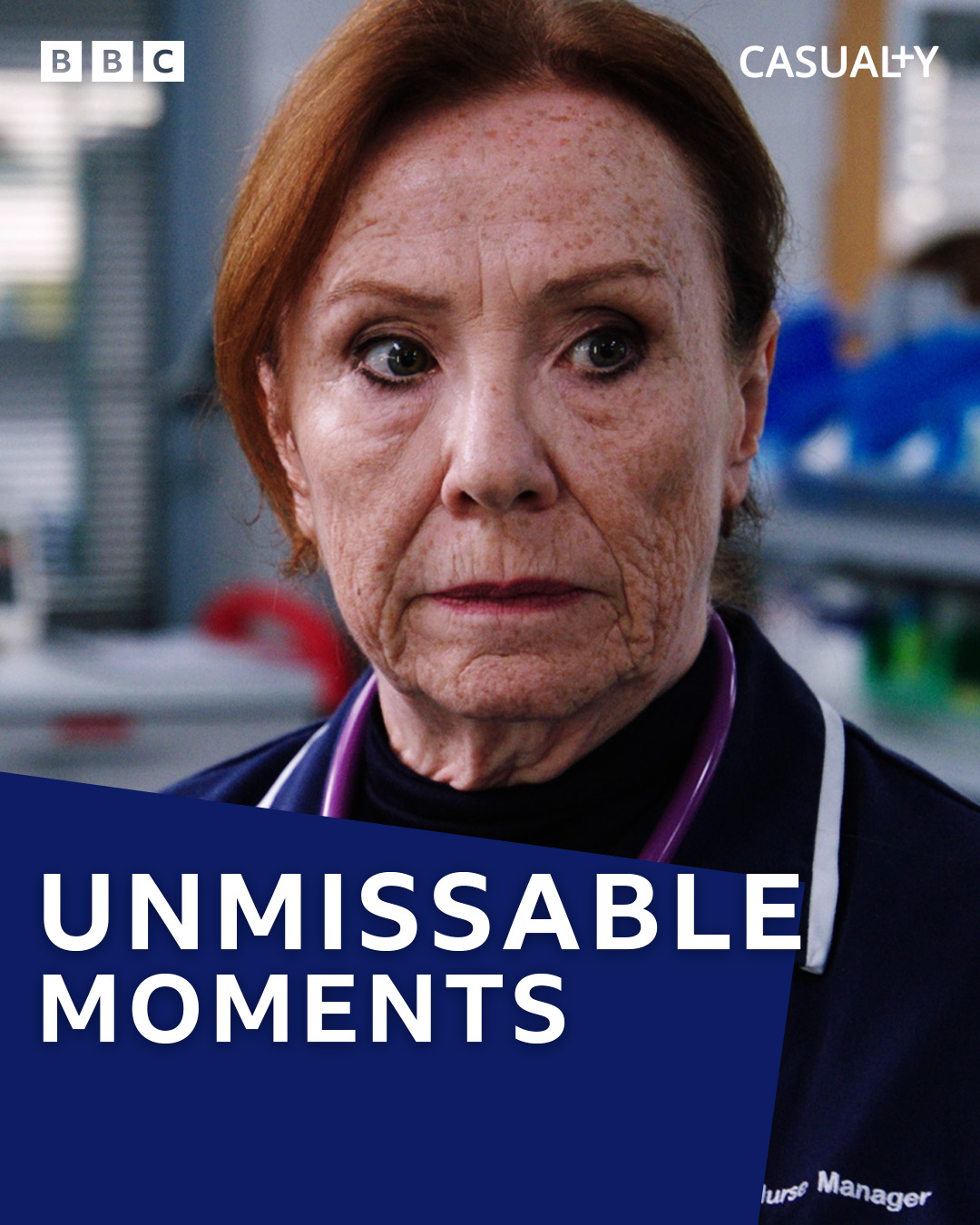
Siobhan McKenzie pushes through trauma as Casualty explores the cost of carrying on
In the aftermath of her shocking attack, Casualty shifts its focus from cliff-edge suspense to something far more intimate — Siobhan McKenzie’s determination to keep working when she’s clearly not okay.
Next week’s episode shows Siobhan back in the Emergency Department, doing everything she can to prove that she’s still the same capable, reliable professional her colleagues depend on. On the surface, nothing has changed. She treats patients, completes paperwork, and keeps her composure intact. But underneath, the cracks are beginning to show.
Trying to be “normal” again
Siobhan insists she doesn’t want special treatment. She reassures Flynn that returning to work is exactly what she needs — structure, focus, purpose. For someone who has always defined herself by competence and control, stepping back feels more frightening than pushing forward.
Yet subtle moments reveal how deeply the attack has unsettled her. She flinches at sudden movements. Her guard is up around patients in ways it never was before. Routine interactions carry a quiet edge of anxiety that she’s struggling to hide.
It’s not dramatic. It’s realistic — and that’s what makes it so unsettling.
Flynn sees what Siobhan won’t say
Flynn, already carrying the weight of the CQC inspection and leadership pressure, quickly realises that Siobhan’s “I’m fine” doesn’t quite ring true. Concerned but careful not to undermine her autonomy, he gently suggests she consider seeing a therapist.
It’s not framed as a weakness. It’s framed as support.
For Siobhan, though, the suggestion lands heavily. Therapy would mean admitting that the attack didn’t just happen to her — it changed her. And that’s a truth she may not yet be ready to face.
A quiet internal battle
The episode doesn’t rush Siobhan toward an answer. Instead, it lingers on her internal conflict. She wants to keep going. She wants to believe resilience alone will be enough. But the more she pushes herself, the more obvious it becomes that trauma doesn’t disappear just because the shift is busy.
The question isn’t whether Siobhan is strong enough to carry on — she clearly is.
The real question is whether carrying on without help will eventually cost her far more.
Why this storyline matters
Siobhan’s arc stands out because it avoids easy resolutions. There’s no instant breakdown, no sudden recovery. Instead, Casualty explores something many viewers will recognise: the pressure to “get back to normal” before you’ve had time to process what happened.
By placing Siobhan back in the ED so quickly, the show highlights a harsh reality for many healthcare workers — trauma doesn’t pause just because patients still need treating.
What comes next?
Whether Siobhan agrees to therapy remains uncertain. But one thing is clear: pretending everything is fine is becoming harder by the minute. And as the pressure inside Holby City continues to build, Siobhan’s quiet struggle may soon demand a choice she can’t keep avoiding.
In a boxset already defined by system failures and emotional fallout, Siobhan’s story asks one of the most important questions Casualty has posed this season:
How long can someone keep saving others before they finally allow themselves to be saved?